Climate science dominates the day’s briefing, with researchers warning that a strengthening El Niño is amplifying an already unusually warm planet and sharpening risks from extreme weather to mountain flooding. Elsewhere, astronomers push farther into the distant universe while e...
Climate science dominates the day’s briefing, with researchers warning that a strengthening El Niño is amplifying an already unusually warm planet and sharpening risks from extreme weather to mountain flooding. Elsewhere, astronomers push farther into the distant universe while energy and biology studies report advances with longer-term implications.
Scientists warn that a “super” El Niño is intensifying and is likely to keep global temperatures unusually high across wide regions. Researchers tracking temperature anomalies describe exceptional warmth across much of the world and say the pattern can disrupt rainfall, worsen heat and contribute to more extreme weather in the months ahead.
Record sea surface temperatures in the central and eastern tropical Pacific point to a strengthening El Niño that could persist into late 2026. The warming exceeds long-used benchmarks, and some scientists say the exceptional readings may signal that familiar El Niño behavior is shifting as the broader climate system continues to heat up.
A new study finds that nearly 300,000 people in Nepal’s Himalayas now live in flood-prone areas as hazards grow in high mountain regions. Expanding glacial lakes, thawing permafrost and unstable ice and rock increase the risk of destructive floods and landslides, underscored by a recent avalanche-driven disaster in the region.
General Fusion says its Lawson Machine 26 has heated plasma above 12 million degrees Celsius, a milestone for the company’s magnetized target fusion program. The result is presented as a step toward proving key parts of its approach to fusion power, though substantial work remains before any commercial-scale system becomes practical.
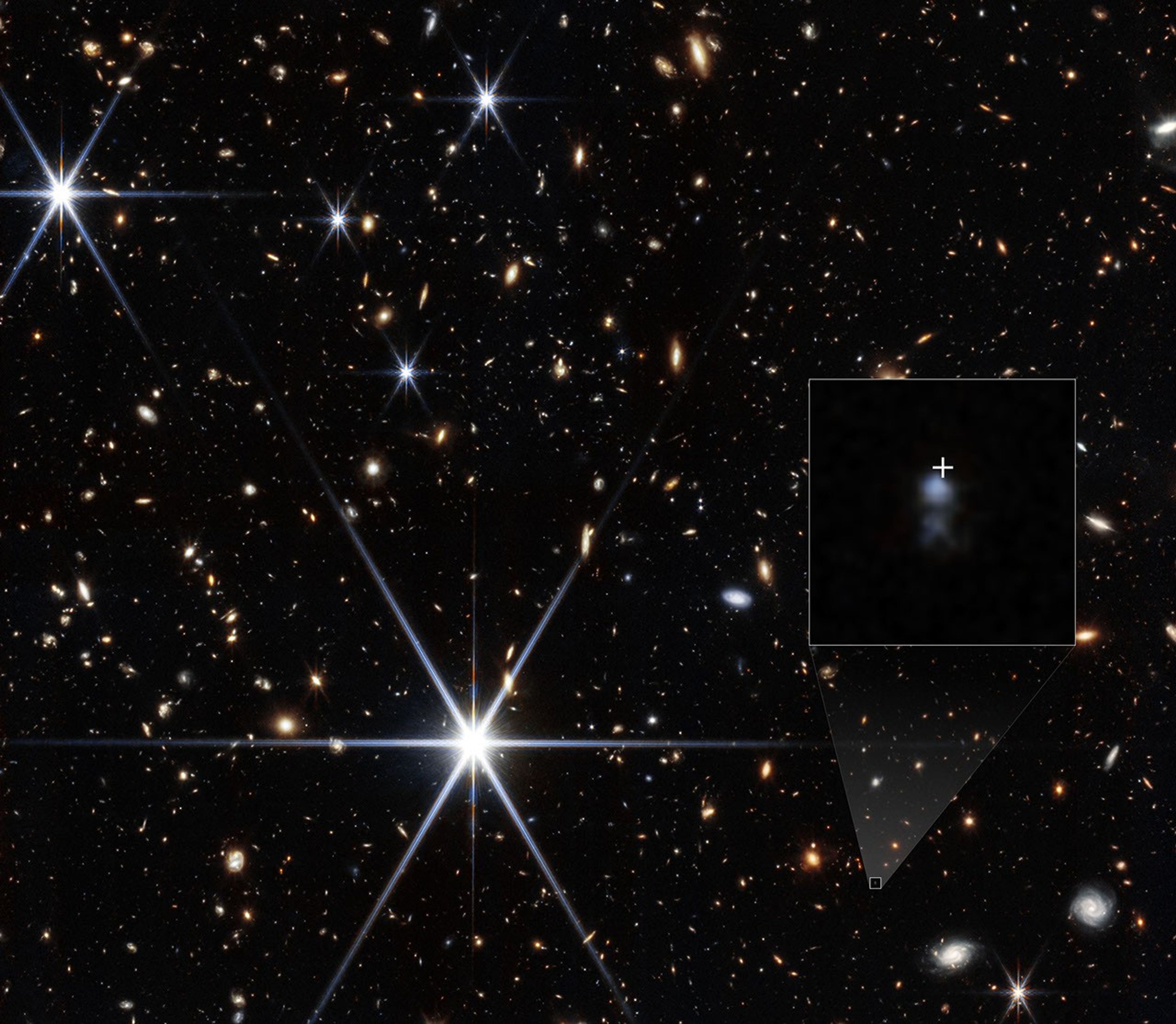
Astronomers report detecting what they say is the most distant fast radio burst yet observed, a millisecond flash of radio energy that traveled for more than 10 billion years to reach Earth. The finding pushes the known range of these mysterious signals deeper into the early universe and offers another tool for studying cosmic history.
Using the James Webb Space Telescope, astronomers have identified the host galaxy of the farthest known fast radio burst. Pinpointing the galaxy gives researchers more context for where the burst formed and may help explain the origins of fast radio bursts, which remain poorly understood because many appear only once.
Researchers studying nearly 900 dogs across about 120 breeds link faster ageing in larger dogs to epigenetic changes that may affect mobile DNA, sometimes called jumping genes. The work suggests that body size alone does not explain why big dogs tend to have shorter lives, and that gene regulation plays a central role.
Researchers at Maharshi Dayanand University and GM University are named in a global ranking of the world’s top 2% scientists. The recognition highlights the standing of individual researchers and institutions in international citation-based assessments across scientific fields.





Top Science stories
- Scientists warn “super” El Niño is intensifying, with global temperatures likely remaining unusually high (4 sources)
- Record warm Pacific seas indicate strengthening El Niño through late 2026 (4 sources)
- Study finds larger dogs show faster epigenetic aging linked to DNA “jumping genes” (3 sources)
- Nearly 300,000 in Nepal Himalayas live in flood-prone areas as risk grows (2 sources)
- MDU and GM University researchers named among the world’s top 2% scientists (2 sources)
- ICAR-CPCRI and Coconut Development Board launch tree-top coconut sap concentrator (2 sources)
- Draconids meteor shower set to peak tonight, with UK and US viewing guidance (2 sources)
- James Webb pinpoints host galaxy of farthest fast radio burst ever observed (2 sources)
Wendy Webster
Author at IfHighLow